
Painting the real world — differently.
I paint places, people and animals that catch my attention for particular reasons. One of the things I value about painting now is that it can be both familiar and unexpected. My work is recognisable. You can see what the subject is, understand the place and form an immediate connection with it. That matters to me. I think this is also why people who wouldn’t necessarily think of themselves as “art people” can find an affinity with my paintings. They look like paintings in the way many of us instinctively expect a good painting to look: there is a real subject, a recognisable place and enough detail to draw you in. But they aren’t always simply photographic copies of what was there.
Places you know. Seen differently.
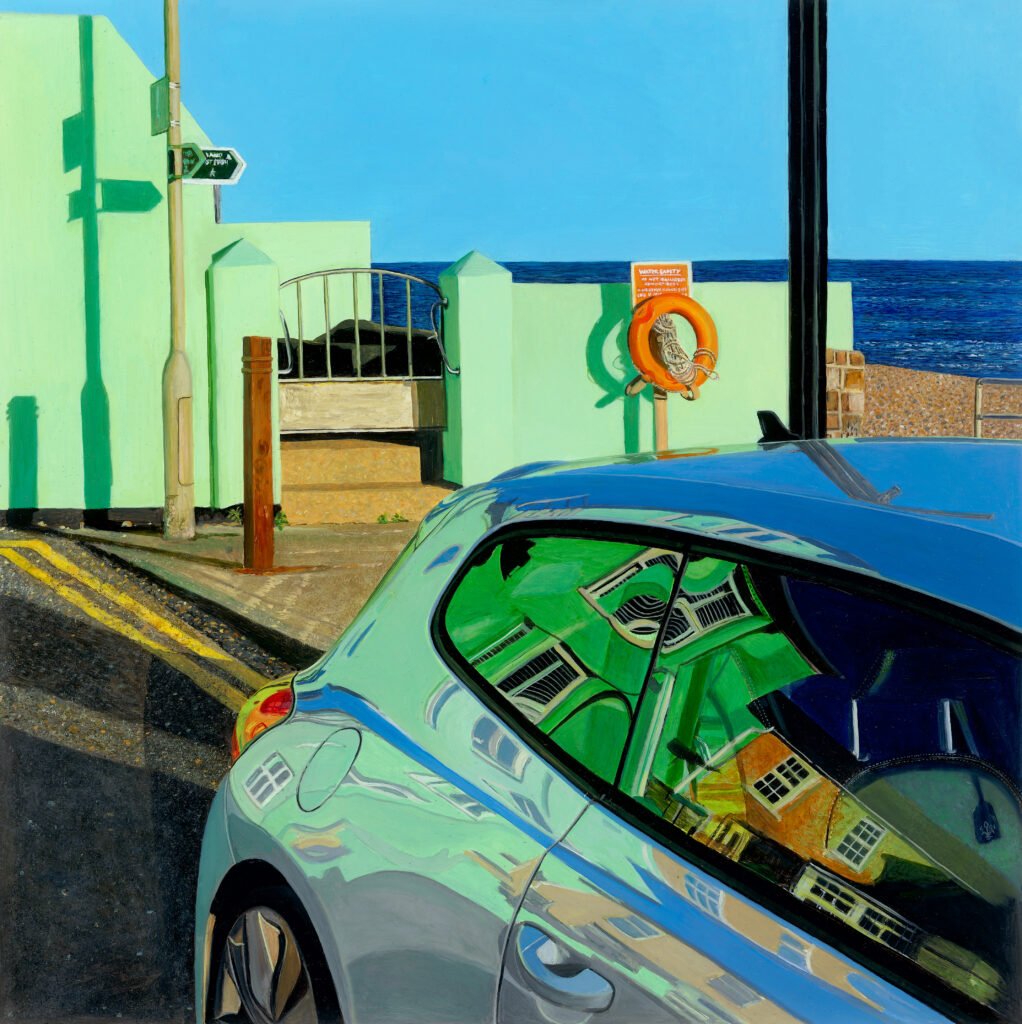
My paintings have developed considerably over time, and not all of my work follows the same process. My earlier paintings reflect different stages of that development, while my more recent work represents a clearer direction — and the direction I intend to take the work in the future. My paintings begin with photographs, sometimes more than a hundred, but I don’t try to reproduce them. The photograph is a starting point: I simplify, reshape and reinterpret what I see, changing colour, detail, composition and emphasis until the image becomes a painting in its own right. The result remains recognisable, but it is no longer a photographic record. It is my interpretation of a real place. I’m interested in that space between realism and interpretation. I want the viewer to recognise something familiar, but then notice that something isn’t quite as they expected — the colour, the light, the composition or the way the details have been handled.
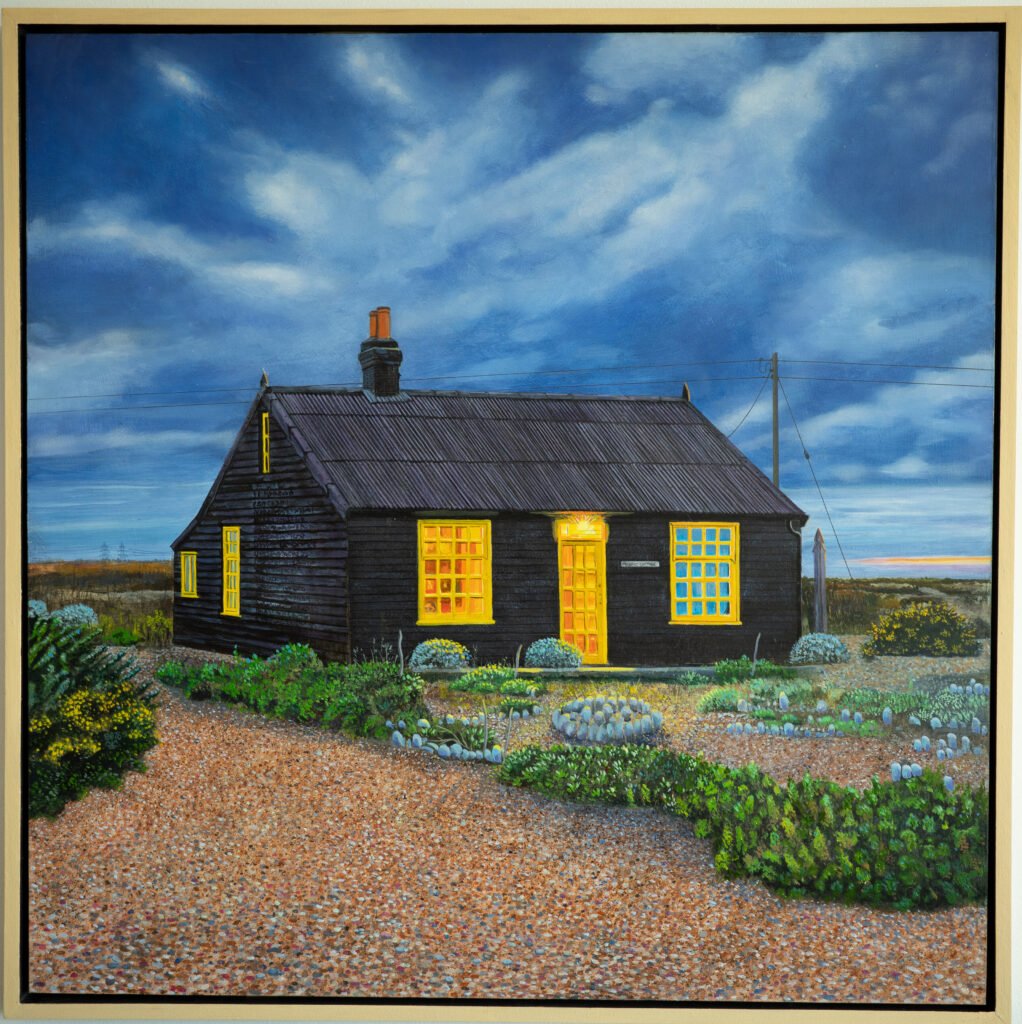
A developing body of work.
My older paintings are part of that journey. They don’t all share the same design process or visual language, because my approach has evolved over time. The newer work is where that evolution has begun to settle into a clearer direction. I am increasingly interested in taking a recognisable scene and deciding what really matters about it — what to keep, what to remove, what to exaggerate and what to change. So while the work is becoming more interpretive, I don’t want to lose the connection with the real world that allows someone to look at a painting and immediately think: I know that place. That recognition is the starting point. What happens next is the reason for the painting.
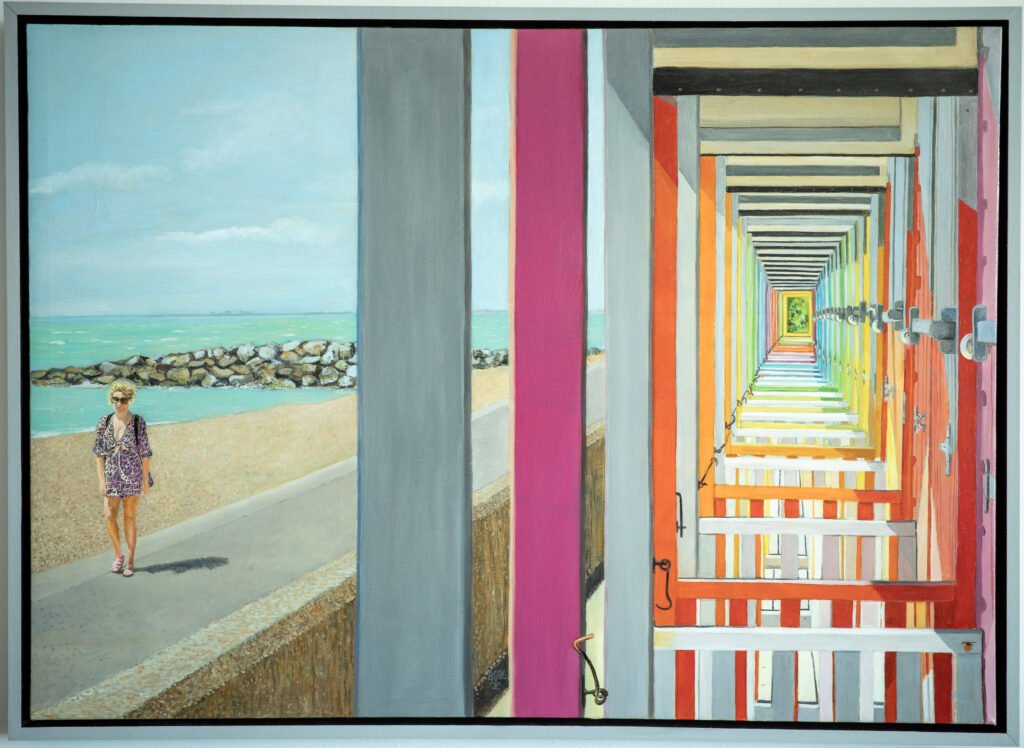
Paintings and prints.
I make original paintings as well as fine-art prints and artist editions. The original paintings are individual works, painted by hand and each with their own character. For those who would like to own the image without the price of an original, selected works are also available as high-quality fine-art prints on Hahnemühle paper. Occasionally, I mount prints by hand so that they look just like the originals did including the framing. My prints are not numbered limited edition prints for the sake of it, but carefully produced fine-art quality reproductions of the painting, allowing the work to be enjoyed at a more accessible price by anyone, not just art collectors. This accessibility is very important to me.
Why these places?
I’m drawn to places that already have something about them — an atmosphere, an unusual quality of light, a particular structure, or simply a feeling that makes me want to stop and look. Sometimes the place is familiar. Sometimes it is somewhere I’ve discovered myself. Either way, the aim isn’t simply to record it. It’s to make you look at it differently.
Exhibitions and recognition.
My work has been exhibited in a few galleries and society exhibitions in recent years and has received particularly recognition from the Folkestone and Hythe Art Societies, including “Best in Show” seven times now across both societies. My work has also been selected by several juried shows. For me though, the real test of a painting is much simpler: whether it makes someone stop, look again, and want to take it home.

My general aim through my art now is to give the viewer an extra layer to think about if they want to connect more deeply. Sometimes that’s simply narrative, and other times it challenges your eyesight and how you interpret your surroundings. But it’s always down to you to decide how far you go. The underlying aim is to make something beautiful to just look at. Occasionally, I will make minor changes to what you expect to see in order to add a little humour or to deceive the eye, but every part of every image comes from a basis of reality that you can connect with.
The detail I stride for isn’t always easy to achieve quickly. It’s down to a mixture of patience and determination, and possibly elements of meditation. Every day I plan to paint, I stare at my progress for several minutes immediately on waking up. New things show up every time I look, which points towards the next session. A process of iteration takes place.
I have various paintings for sale, and many can be printed too, at any size you prefer. I also work on commissions.
If you see this symbol 🔴, it means the original painting has been sold.
If you see this symbol ✅, it means that a quality giclee print is available.
You can see a selection of my artwork here.
I am also a Photographer.

I primarily use my camera as a sketch book of course, but I also take a different perspective through this medium. I still like to tell the truth with my camera, but here, I look to create images that uncover an unexpected viewpoint, or to challenge our view of reality. I am now looking for these places where my photography and art can meet face to face. I have plans to explore this idea in more detail in the future, but the first series can be found here.
I do other creative things too. Some of these are shown on my Projects page.
Please contact me with your requirements, or any questions you may have.
Email: ronmarshart@gmail.com. I look forward to hearing from you.
Ron